
HVAC contractor insurance for a licensed trade that handles a regulated gas
Two things set HVAC apart from most trades. It is licensed, and in Texas the license itself requires general liability coverage at amounts written into TDLR rule. And it handles refrigerant, a substance federal rule says may not be vented and may be serviced only by certified technicians, whose release is the kind of event a standard general liability form can exclude. General liability is the core; contractors pollution liability is the HVAC-shaped addition.
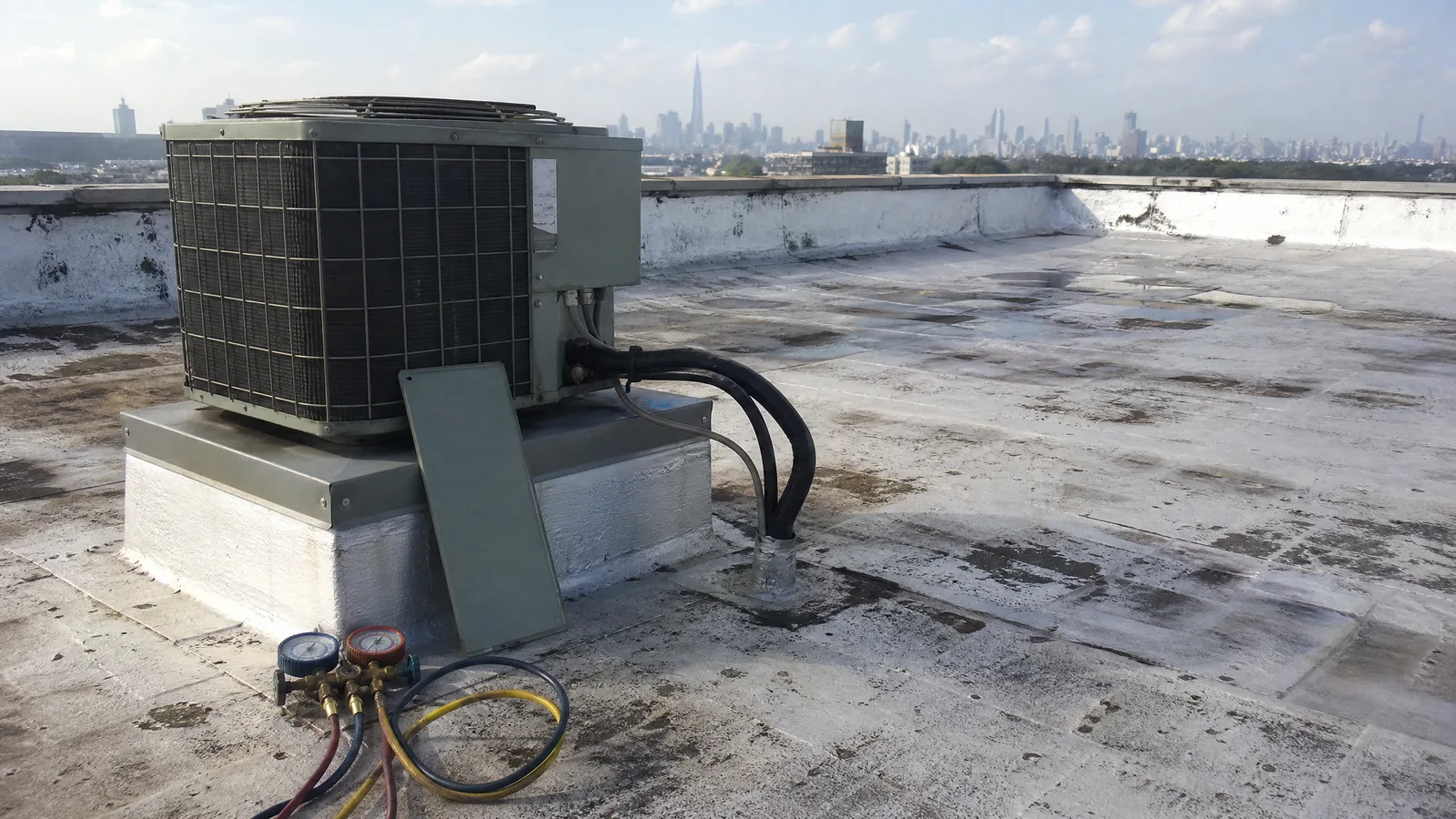
HVAC liability insurance: general liability is the core, with one gap
A commercial general liability policy responds to four categories of events a business can be held responsible for, and the NAIC lists them: bodily injury, damage to others' property, personal injury such as slander and libel, and false or misleading advertising (NAIC, Insure U: Small Business Insurance). For an HVAC contractor the first two do the work. A technician brazing a line set in an attic, a condenser dropped through a ceiling, a customer tripping over a recovery hose: each is a premises or operations claim, and general liability is the policy that answers it. The NAIC also lists what the form does not cover, including professional errors and omissions, so a claim that a system was designed or sized wrong sits separately from a claim that a technician damaged the building. Ask how faulty workmanship is treated on the form you are offered rather than assuming.
The gap is refrigerant. Since 1986 the standard ISO general liability form has carried what the industry calls the absolute pollution exclusion, and the form's definition of pollutants (any solid, liquid, gaseous or thermal irritant or contaminant, including vapor, fumes, and chemicals) is wide enough to reach a gas released from a system (IRMI, absolute pollution exclusion). Courts disagree about how far the exclusion runs, which is not a comfort when the claim is yours. That is why HVAC contractors get asked for contractors pollution liability and painters do not; the coverage page explains the exclusion and the fill.
General liability insurance for HVAC contractors is sometimes the law
Most trades on this site answer "do I need insurance" with the client's certificate demand, because no statute speaks. HVAC in Texas is different. The Occupations Code requires a state air conditioning and refrigeration contractor license and tells TDLR to set insurance requirements by rule, and the rule does: a Class A licensee maintains general liability of at least $300,000 per occurrence and $600,000 aggregate, a Class B licensee at least $100,000 per occurrence and $200,000 aggregate, each with a products and completed operations aggregate, and the certificate is filed with the initial application (16 TAC 75.40). The full rule, the license classes, and the Texas workers compensation opt-out are on the Texas HVAC contractor insurance page.
Other states write their own license terms, and we print only the minimums we have read in a rule, so the check for your state is its licensing board. What holds everywhere is the commercial reality: a general contractor or property manager wants a certificate of insurance, often naming them as additional insured, before a crew sets a unit. For the trade at the other end of the licensing spectrum, see how the question plays out for a handyman.
The rest of the HVAC business insurance set
Tools and equipment. Recovery machines, vacuum pumps, gauges, brazing rigs, and the refrigerant inventory itself ride in the van, and business property coverage can extend to equipment and supplies whether owned or leased (NAIC). Theft from a vehicle is the case to ask about by name.
The vans. A business that owns or leases vehicles needs commercial auto; the NAIC notes personal policies may exclude business-related liability, and commercial forms can extend to employees' cars driven on company business, which matters the day a technician takes a call in his own truck.
Workers compensation. Nearly all states require it once you have employees, in the NAIC's words, and Texas is the named exception where private employers may opt out. HVAC technicians work at height, with heat, and with pressurized systems, which is the kind of payroll an underwriter looks at closely.
Section 608 certification. Not an insurance policy, but an underwriting fact. Federal rule prohibits knowingly venting refrigerant during maintenance, service, repair, or disposal, requires technicians who service the equipment to hold Type I, II, III, or Universal certification, and restricts refrigerant sales to certified buyers (40 CFR 82.154, 82.161). EPA says the credentials do not expire (EPA, Section 608 certification). Be ready to say who on the crew holds which card.
What moves an HVAC contractor's premium
We answer this with factors, because the figures are individual and any number we printed would be a guess about your operation. The mix of work leads: residential service and changeouts, commercial installation, new construction, and industrial or commercial refrigeration each read differently to an underwriter. Then license class and the size of systems you touch, payroll and technician count, the vehicles on the schedule, how much of the job you subcontract and whether those subs carry their own coverage, your claims history, and your state. Underwriters price what they cannot see. A submission that names the work mix, the license class, and the technician count leaves less of it unseen.
Your state's rules
The license, the insurance it requires, and what it means for coverage, state by state. Texas first, with more states to follow.